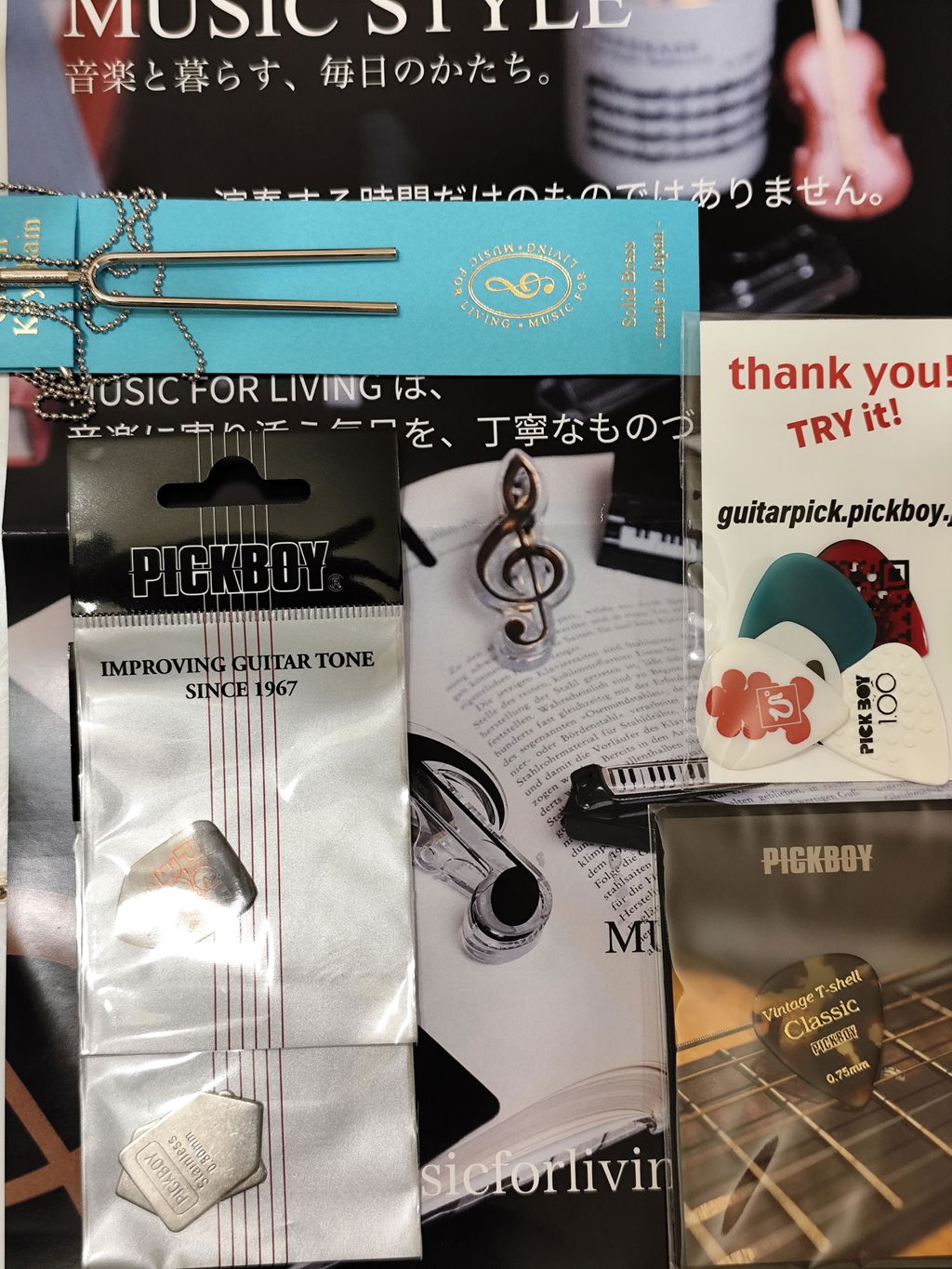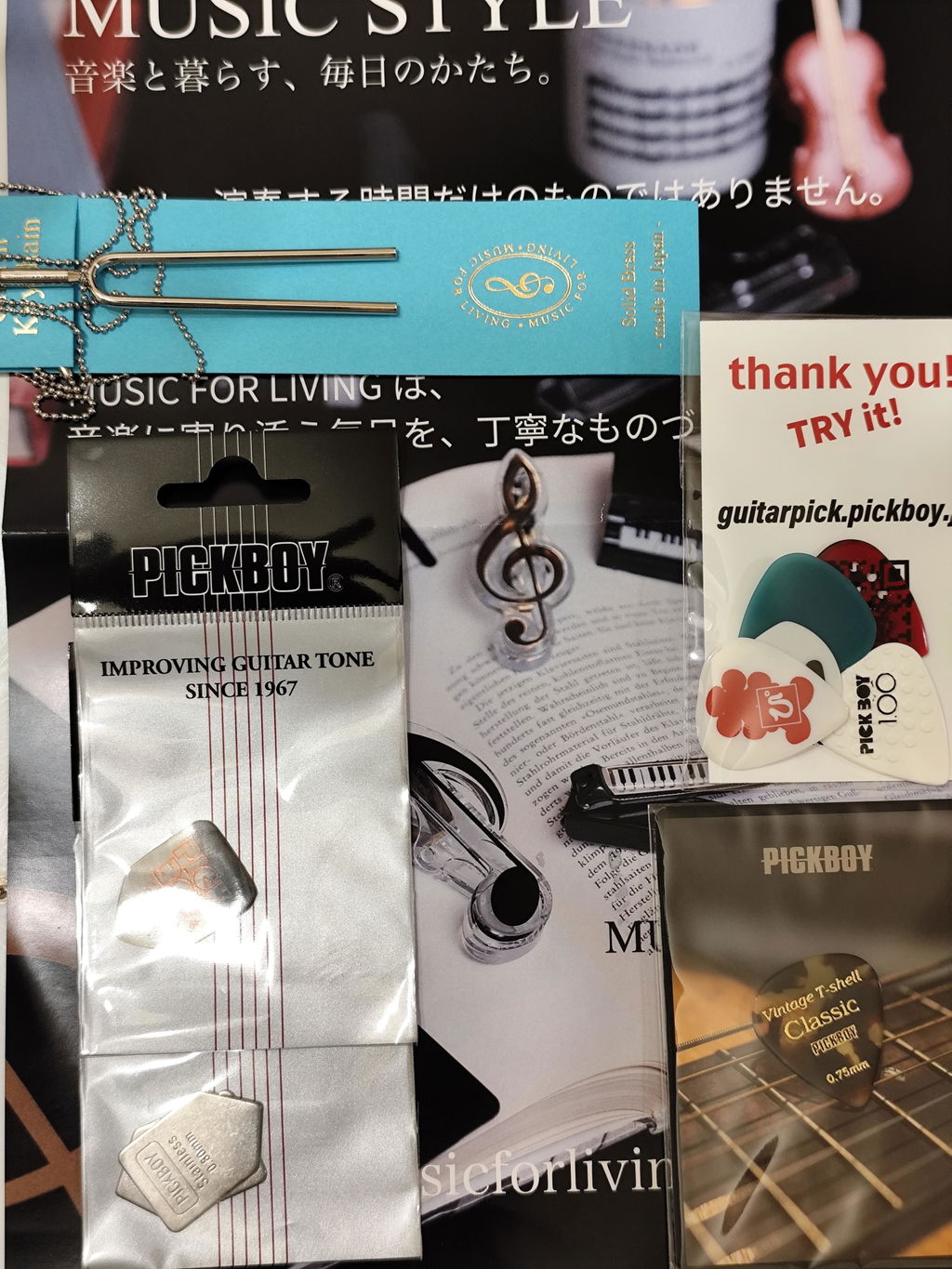

Comprehensive Guide to Types of Guitar Picks|Differences in Shape, Material, and Thickness
Types of guitar picks can be categorized by shape, material, and thickness
There are many types of guitar picks. The quickest way to understand the differences is to look at the three aspects of shape, material, and thickness. Shape affects how easy it is to hold and how the tip contacts the strings, material influences the surface texture and flexibility, and thickness relates to the feel when strumming the strings.
In this article, we have compiled a list of representative types handled by PICKBOY. Since sound and playability also change depending on combinations and playing style, please use each section as a guide for "which one to try."

Types of Guitar Picks Classified by Shape
When comparing shapes, focus on the area you can pinch with your fingers and the position of the tip that touches the string. Even shapes with the same name can vary in size and tip roundness depending on the product.

Teardrop Shape
A shape with a clearly defined tip, making it easy to check comfort for both chords and single notes. It is a good option for those looking for a size that fits comfortably at the fingertips.
Triangle Shape (Onigiri Shape)
A shape with a wide surface area that makes it easy to decide where to hold it. Many models allow use of all three corners, making it easy to try for stroke-focused playing.
Jazz Shape
A relatively small shape suited for those who want to feel a close distance between finger and string. It is an option when you want to carefully check how the tip contacts the string.
Home Plate Shape
It has a shape reminiscent of a baseball home plate. Since the way the fingers fit differs from other shapes, please try holding it to see if you want to change the grip feel.
Types of guitar picks categorized by material
The material affects the surface texture and flexibility. However, you cannot determine the tone or durability solely by the material name. Comparing picks of the same shape and similar thickness makes it easier to notice the differences.

Celluloid
A classic material long used for guitar picks. It also serves as a reference point when trying different materials for the first time.
Polyacetal
For those who want to compare the different surface feel and response when passing over strings compared to celluloid. For more detailed information on material differences, please also see Comparison article of Celluloid and Polyacetal.
Ultem (P.E.I / Polyetherimide)
A candidate for those who want to try a firm response and different contact with the strings. The feel also changes depending on thickness and shape.
Celltex
One of the materials offered by PICKBOY. Compare it with celluloid to check your preference for texture and playing feel.
Nylon
A candidate for those who want to compare flexibility and the sensation transmitted to the fingers. Try whether you can handle it without force, both in strumming and single notes.
Types of guitar picks categorized by thickness
Generally, the thinner the pick, the more flexibility you can feel, and the thicker it is, the more direct the response when moving the tip. Below is the classification used by the PICKBOY store.1.2mm is listed under both Heavy and Extra Heavy, so please also check the thickness of individual products.

Thin (up to 0.5mm)
A thickness that easily allows you to feel flexibility. For those who want to try a light stroke sensation.
See ThinHeavy (0.9–1.2mm)
For those who want to suppress flexibility and check the attack of single notes.
See HeavyExtra Heavy (1.2mm and above)
For those who want to try the response unique to thick picks.
See Extra HeavyOnce you understand the types, choose the one that suits you best.
The types of guitar picks expand through combinations of shape, material, and thickness. Once you find a type that interests you, try changing only one condition at a time to compare playing, making it easier to understand your preferences.
For specific selection methods, read the Guitar Pick Selection Guide. If you want to see a wide range of products, please use View PICKBOY Picks List.